
Responsible Gaming: Limits, Pauses and Help
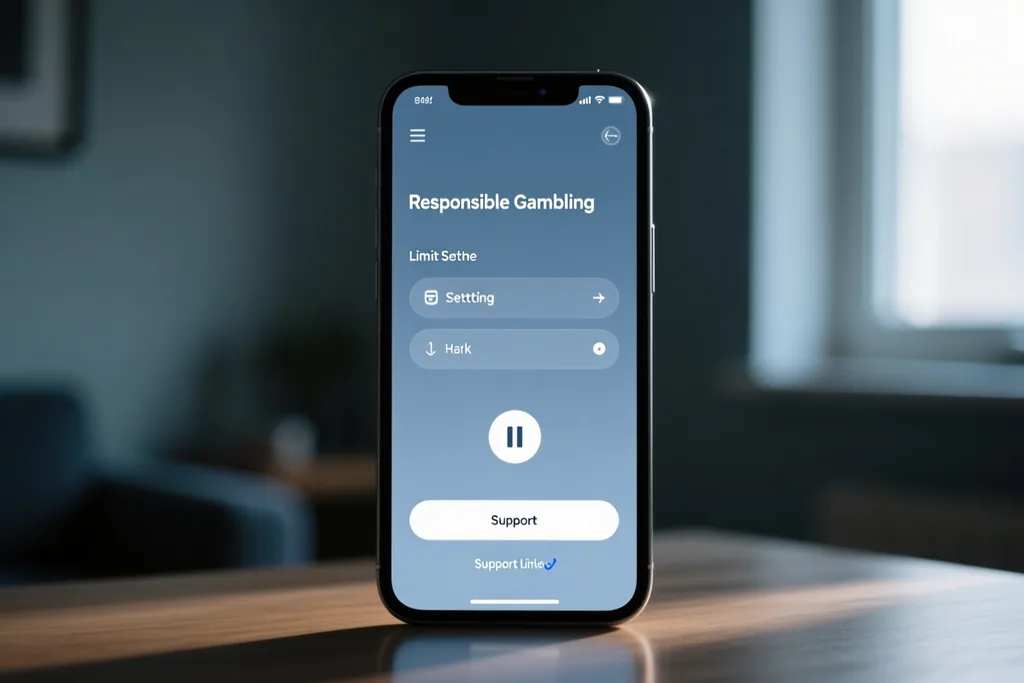
Responsible gaming is not a slogan at the bottom of a page; it is a set of practical tools and habits that keep an activity enjoyable and within the boundaries a person has chosen. The tools exist on almost every platform, and the habit of using them is what makes them effective.
This guide explains the main controls, how they differ and where to find help if play stops being fun. It is information only, and it does not present gambling as a way to make money. If you feel that control is slipping, the honest step is to use the tools or to seek support.

The controls that exist
Most platforms offer a deposit limit, a loss limit and a session or time limit, along with a time-out that pauses the account for a chosen period. Each one acts on a different part of the activity, which is why more than one can be useful.
A deposit limit controls how much can be added, a loss limit caps what can be lost, and a time limit governs how long the session runs. Together they turn intentions into rules that hold even when judgement is under pressure, which is exactly when a rule is worth more than a decision.
Why limits are deliberately uneven
Reducing a limit usually takes effect immediately, while increasing one often involves a waiting period. That design is intentional: it protects a considered decision made in a calm moment from being reversed during a session when the impulse is strongest.
Understanding that asymmetry makes the limits easier to use well. They are not obstacles but helpers, and the fact that they slow down a rushed decision is the feature rather than the flaw.
Pauses and self-exclusion
A time-out is a short pause, chosen by the account holder, during which the account cannot be used. It is useful when a break is needed without closing the door permanently, and it can be a way to interrupt a pattern before it becomes a problem.
Self-exclusion is the longer version. It closes access for an extended period that cannot easily be shortened, and it is the right tool when the concern is persistent rather than momentary. Many platforms also offer links to install blocking software that extends the break beyond one site, and those options are worth knowing.
Warning signs to take seriously
The signs of a problem are usually about behaviour rather than money: playing longer than intended, chasing losses, hiding the activity, borrowing to continue, or feeling anxious and irritable when unable to play. Any of these is a reason to pause and look honestly at the situation.
None of these signs is a judgement about character; they are signals that the activity has moved beyond entertainment. Recognising them early makes it far easier to act than waiting until the consequences have become serious.
Where to get help
If play stops being fun, the first step is to talk to someone you trust and to use the controls on the account, such as a time-out or a self-exclusion. Support services in most countries are free, confidential and available to anyone concerned about their own or another person's gambling.
It is also worth knowing that asking for help is not an overreaction. The points below summarise the practical measures, and they are useful for anyone who wants to keep the activity within limits rather than for a crisis alone.
- Set deposit, loss and time limits before you play.
- Use a time-out when you need a break from the account.
- Consider self-exclusion if control feels difficult.
- Take the signs of chasing losses and secrecy seriously.
- Contact a support service; help is free and confidential.
Controls and what they do
The table outlines the main tools and the situation each one suits.
| Tool | What it does | When it helps |
|---|---|---|
| Deposit limit | Caps money added to the account | For everyday budgeting |
| Loss limit | Caps what can be lost | When sessions run long |
| Time limit | Restricts the length of sessions | To keep play proportionate |
| Time-out | Pauses the account for a period | For a short break |
| Self-exclusion | Blocks access for longer | When control is difficult |
Responsible gaming is a practice rather than a statement, and the tools are only as useful as the habit of using them. Set the limits in advance, take a break when you need one, and treat the warning signs as information rather than as criticism. Gambling is entertainment and never a way to make reliable money, and help is available and free for anyone who wants it.
18+. Gambling is a game of chance: no strategy, bonus or prediction guarantees a win. Every spin, card and match outcome is random and independent, odds and conditions are set by the operator and can change, and this page is information only — not advice and not an invitation to bet. Play for entertainment, use the limits and pauses available in your account, and stop if play stops being fun. Nothing here can make an outcome predictable, and past results never influence the next round. Set a budget and a time limit before you play, and treat any promise of a sure win as a warning sign.
Read next
Getting Started: A Beginner’s Guide
A calm first-session checklist, from choosing a password to setting limits.
Bonuses and Wagering Requirements Explained
How a welcome offer is read, what wagering means and when a bonus can lapse.
Common Mistakes to Avoid
Chasing losses, doubling stakes and trusting “guaranteed” predictions.