
Bonuses and Wagering Requirements Explained

A bonus usually looks like a simple gift and is in fact a set of conditions. The headline figure attracts attention, while the terms attached to it decide whether any of it can ever be withdrawn, and those terms are where a bonus is really understood.
This guide explains how a welcome offer is normally structured, what wagering means and when a bonus can lapse. It is information only, and it does not quote any specific amounts, because the terms of an offer are set by the operator and change over time.
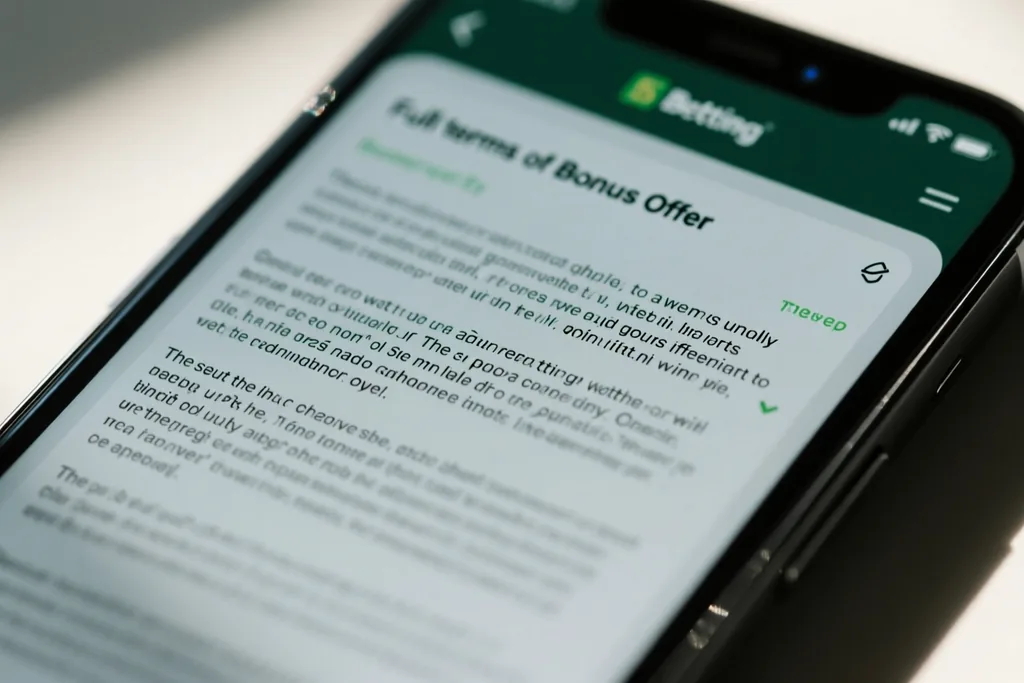
What a bonus actually is
A bonus is credit added to an account under conditions. Between the promotional balance and the money that can be withdrawn stands a set of rules, and those rules usually include a wagering requirement, a time limit and, often, a restriction on which games contribute.
Because a bonus is conditional credit rather than free money, the correct question about any offer is not how large it is but what has to happen before it becomes withdrawable. A large figure with difficult conditions can be worth less than a modest one that can actually be cleared.
How wagering works
Wagering, also called a playthrough requirement, means that a certain total must be staked before the bonus balance can be withdrawn. Until that total is reached, the bonus and any winnings linked to it may remain tied to the account rather than payable.
The requirement is usually expressed as a multiple of the bonus, and the eligible bets are defined in the terms. It is this structure, rather than the size of the offer, that determines how much play the bonus really requires and whether the conditions are realistic for the way you use the account.
Time limits and game weightings
Most bonuses expire. A time limit in the terms means that the requirement has to be met within a window, and anything unfinished when the window closes is normally removed. Reading that line before accepting an offer prevents the disappointment of clearing most of it too late.
Game contribution is the other condition that catches people out. Different games may count towards the requirement at different rates, and some may not count at all, which is why a bonus taken for one kind of play can behave unexpectedly when used on another.
When a bonus can be lost
A bonus can be withdrawn or removed when its conditions are broken or unfinished, such as playing a restricted game, exceeding a maximum stake stated in the terms, or letting the offer expire. These rules are set out in the promotion, and they are what turn a variety of ordinary actions into a breach.
It also matters that a bonus can limit what happens next. While a requirement is open, part of the balance may be unavailable for withdrawal, so a win does not become payable until the conditions are met. Understanding this prevents the surprise of a payout held for a reason that was written down from the start.
Reading an offer before accepting
The sensible habit is to read the terms before opting in, not after. The key lines are the wagering requirement, the time limit, the eligible games and any maximum stake or maximum win attached to the offer.
It is equally reasonable to decline a bonus. Opting out can leave the balance simpler and the withdrawal conditions clearer, and there is no obligation to accept a promotion simply because it is offered. The points below summarise what to check.
- Find the wagering requirement and how it is calculated.
- Check the time limit and when the offer expires.
- See which games contribute and at what rate.
- Look for a maximum stake or a maximum win clause.
- Remember that you can decline a bonus if the terms do not suit.
Key bonus terms
The table lists the terms that decide how a bonus behaves and what each one controls.
| Term | What it controls | Why it matters |
|---|---|---|
| Wagering | How much must be staked | Decides if the bonus is withdrawable |
| Time limit | How long the offer lasts | Unfinished offers can be removed |
| Game contribution | What counts towards the total | Some games may not count |
| Maximum stake | The largest bet while using it | A larger stake can breach the terms |
| Opting out | Declining the offer | Keeps the balance simpler |
A bonus is a set of conditions wrapped around a headline figure, and the conditions are what decide its real value. The amounts, the multipliers and the time limits belong to the operator and can change, so the terms shown with the offer are the only version that applies. Read them before opting in, and remember that a promotion is a marketing device rather than an advantage over the game.
18+. Gambling is a game of chance: no strategy, bonus or prediction guarantees a win. Every spin, card and match outcome is random and independent, odds and conditions are set by the operator and can change, and this page is information only — not advice and not an invitation to bet. Play for entertainment, use the limits and pauses available in your account, and stop if play stops being fun. Nothing here can make an outcome predictable, and past results never influence the next round. Set a budget and a time limit before you play, and treat any promise of a sure win as a warning sign.
Read next
Getting Started: A Beginner’s Guide
A calm first-session checklist, from choosing a password to setting limits.
Responsible Gaming: Limits, Pauses and Help
Deposit limits, time-outs and self-exclusion explained simply.
Common Mistakes to Avoid
Chasing losses, doubling stakes and trusting “guaranteed” predictions.