
Live Betting: How In-Play Wagering Works
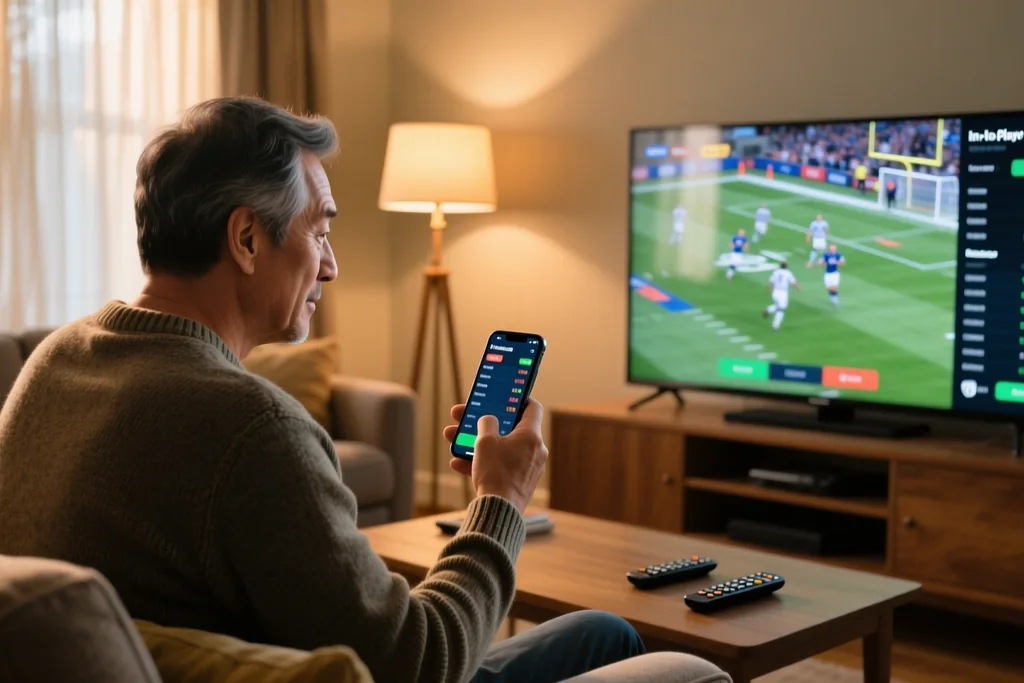
Live betting is placing a wager while an event is in progress, with prices that update as the match unfolds. It turns a pre-match decision into a moving one, and that movement is both the attraction and the part that most deserves understanding.
This guide explains how in-play markets work, why odds shift during an event and what changes for the bettor when the price is no longer fixed. It is information only, and it does not present live betting as more profitable than betting before a match.
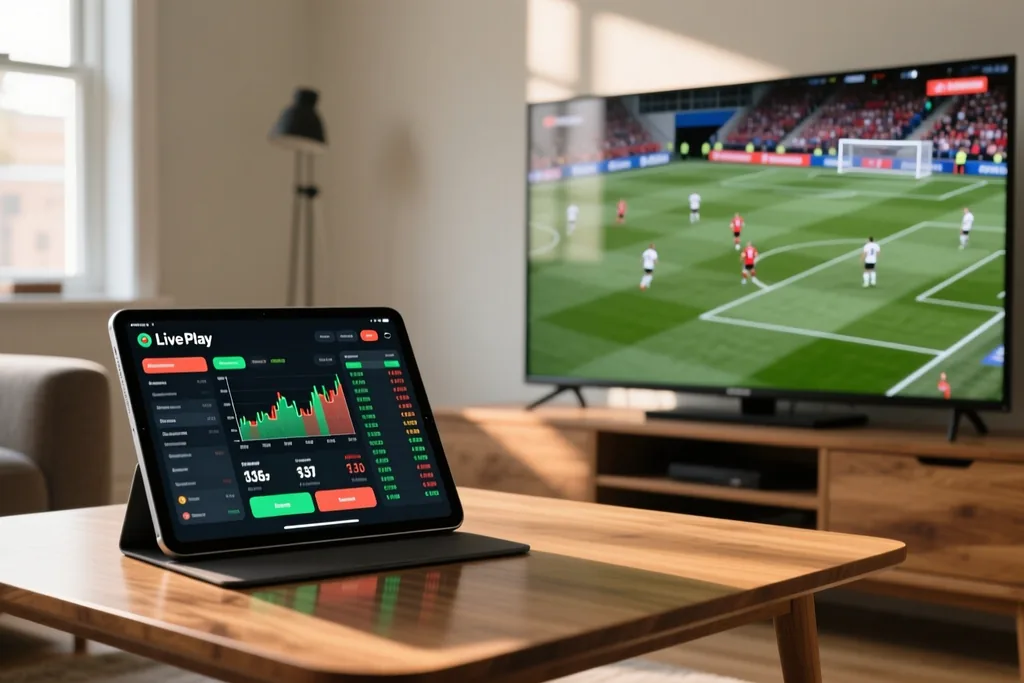
What in-play betting is
In live betting the market stays open during the event, and the operator adjusts prices in near real time as the situation changes. A goal, a red card or a shift in momentum is reflected in the odds within moments, and the bettor decides whether to take the current price or wait.
Because the event is already underway, some of the uncertainty has been resolved and the remaining questions have narrowed. That is why live prices can differ so sharply from the pre-match ones, and why the market can feel more immediate than a bet placed days in advance.
Why the odds move
Prices move for two main reasons: new information and new money. A goal changes the state of the match and therefore the chances of each remaining outcome, while heavy betting in one direction pushes the operator to adjust the price to balance its position.
The result is a market that reflects the current view rather than the original prediction. A price that looked attractive before kick-off can become unattractive ten minutes in, and the reverse can also happen, which is why in-play betting rewards attention to the moment rather than to a pre-formed opinion.
What changes for the bettor
The main change is speed. In-play decisions are usually made in seconds, and the window in which a price is available can close quickly. That pace can encourage reactions rather than plans, which is the opposite of the disciplined approach the margin requires.
A second change is the loss of a fixed reference point. In pre-match betting the price is known at the moment of the bet and settles the outcome; in-play prices move until the bet is placed, so the value received depends on the exact instant of the decision. Knowing this helps avoid the feeling of missing out on every shift.
The most common mistakes
The most frequent error is chasing a price that has already moved, placing a bet to make up for one that was missed. Another is increasing a stake to recover a live bet that has just gone wrong, a reaction that the speed of in-play markets makes especially easy to fall into.
A third is to treat a short-lived price as a signal about the result rather than a summary of the present situation. Movement reflects the state of the market, not a hidden truth about the outcome, and reading it otherwise usually leads to decisions made in the heat of the moment.
Keeping in-play betting under control
The practical measures for live betting are the usual ones, applied with a little more discipline because the pace is higher. Decide the stake before the event, not during it, and keep the total for the session within a pre-set limit.
It also helps to decide in advance which markets you will follow, so that the moving board does not set the agenda. The points below summarise the habits that keep a fast market from turning into a fast loss, and none of them depends on predicting the outcome.
- Set the stake and the session limit before the event begins.
- Accept that a moving price is not a prediction of the result.
- Avoid placing a bet to make up for a missed one.
- Do not raise stakes to recover a live bet that went wrong.
- Follow a limited set of markets instead of the whole board.
Pre-match and in-play betting
The table contrasts the two ways of betting on the same event, focusing on how the price and the decision differ.
| Point | Pre-match | In-play |
|---|---|---|
| When the price is fixed | At the moment of the bet | Until the bet is placed |
| Information available | Form and preview | The current state of the event |
| Speed of decision | Considered | Often a few seconds |
| Main risk | Overconfidence in analysis | Reacting instead of planning |
| Effect on the margin | Built into the odds | Built into the odds |
Live betting is the same market seen through a moving window. The prices change because the situation changes, not because the outcome is becoming predictable, and the margin travels with every quote. Plan the stake and the limit before the event, keep a cool head when the board moves, and remember that no in-play decision guarantees a win.
18+. Gambling is a game of chance: no strategy, bonus or prediction guarantees a win. Every spin, card and match outcome is random and independent, odds and conditions are set by the operator and can change, and this page is information only — not advice and not an invitation to bet. Play for entertainment, use the limits and pauses available in your account, and stop if play stops being fun. Nothing here can make an outcome predictable, and past results never influence the next round. Set a budget and a time limit before you play, and treat any promise of a sure win as a warning sign.
Read next
Football Betting: Markets and Basics
Match, outright and player markets, and how a football bet is settled.
Types of Bets: Singles, Accumulators and Systems
How risk and probability change when bets are combined or split.
Odds and Margin: How to Read Them
What an odd means, how it converts to probability and where the margin sits.