
Live Casino: Playing With Real Dealers

Live casino takes a familiar table game and streams it from a real studio, with a real dealer and real equipment, to your screen. The rules of the game do not change because it is online; what changes is how the table feels, how the round is paced and how you interact with it.
This guide explains how a live table works in practice, from the stream and the betting window to the difference between playing alone and playing among other participants. It is information only, and it does not claim that live play changes the nature of chance or the balance of a game.
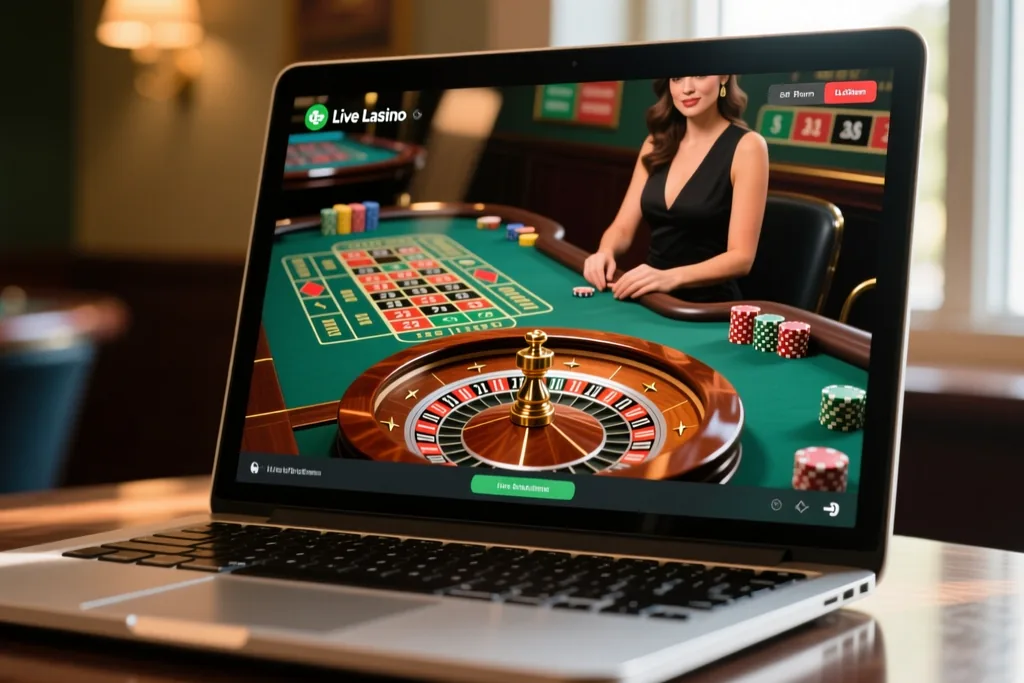
How a live table is streamed
In a live game, a camera films a physical table in a studio while the dealer runs the round by hand. Your device receives the video and sends your decisions back, so the result is produced on real equipment rather than by software animation, and the pace follows the dealer and the table.
Because the round depends on a live feed, a stable connection matters more than raw speed. A brief interruption can cost a betting window, and the platform usually defines what happens if the connection drops mid-round, so that rule is worth reading before you sit at a busy table.
Betting windows and pacing
Each round runs in phases: an open window during which bets are accepted, a closing moment after which no more bets are taken, and the play and settlement. Missing the window means waiting for the next round, so live play rewards attention rather than speed.
The pacing is a feature of the format. There is no way to speed up a dealer or to pause a physical table, and that slower rhythm is precisely what many people value about live games. It also gives more time to think than a rapid software title does.
Playing among other participants
A live table is usually shared. Several participants bet on the same round from their own devices, and the dealer serves everyone at once. Your bet is your own, yet the round is collective, which is part of the atmosphere the format is built to create.
Shared tables can also carry a chat, where participants talk to each other and, sometimes, to the dealer. The same caution applies there as anywhere online: never share personal or account details, and treat anyone requesting them, or offering to help with your account, as a risk rather than a friend.
What differs from software games
A software table is generated and can run instantly, while a live table is filmed and moves at human speed. The maths of the games is comparable in nature; the difference lies in the presentation, the pacing and the presence of a real dealer and real cards or a real wheel.
That difference affects comfort and entertainment, not the likelihood of a result. A live dealer cannot make a game more favourable, and no amount of table atmosphere changes the fact that the outcome is decided by chance and by the rules of the game.
Points to check at a live table
Before you place a bet, confirm the rules that are specific to the table you have chosen, because minimums, maximums and side bets differ widely between tables even within the same platform.
It also helps to test the connection and to know how a disconnect is handled, so that a technical hiccup does not become a surprise. The points below are the ones that most often matter in practice, and none of them is about improving the odds.
- Read the betting window and the closing time of the round.
- Check the table minimum and maximum before you bet.
- Confirm what happens if your connection drops mid-round.
- Keep the stream on a stable connection with enough bandwidth.
- Never share account details in a table chat.
Live table versus software table
The table compares the two formats on the points that people actually notice, without implying that either is more favourable.
| Aspect | Live table | Software table |
|---|---|---|
| Result produced by | Real dealer and equipment | Random number generation |
| Pace | Human speed, fixed rounds | As fast as you choose |
| Interaction | Dealer and other participants | Player and interface |
| Dependence on connection | High, being a live stream | Low, once loaded |
| Effect on the odds | None | None |
A live table is a way of presenting a game, not a different game with different odds. The dealer, the equipment and the shared round create an atmosphere, and the rules the platform publishes define everything else. Play for entertainment at a pace you are comfortable with, keep personal details private, and treat the table minimums as a limit rather than a target.
18+. Gambling is a game of chance: no strategy, bonus or prediction guarantees a win. Every spin, card and match outcome is random and independent, odds and conditions are set by the operator and can change, and this page is information only — not advice and not an invitation to bet. Play for entertainment, use the limits and pauses available in your account, and stop if play stops being fun. Nothing here can make an outcome predictable, and past results never influence the next round. Set a budget and a time limit before you play, and treat any promise of a sure win as a warning sign.
Read next
Live Games: Roulette and Blackjack
Betting windows, decisions per round and differences between live tables.
Virtual Sports: Fast Simulated Events
How simulated matches run and why their results are generated, not predicted.